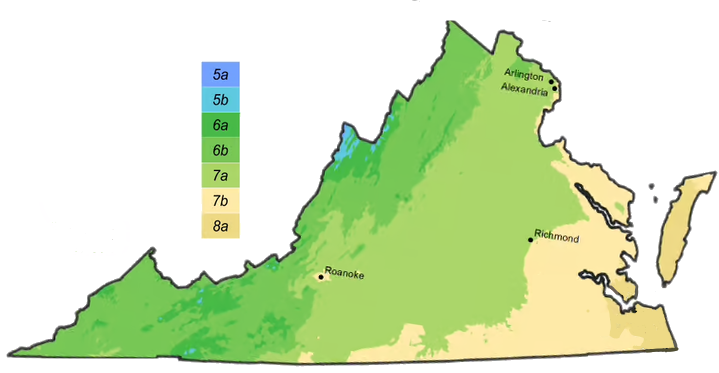
Habitat: lowland species mainly along streams, rivers, ponds, and swamp; also in abandoned fields on alluvial soils. Common in the coastal Plain and Piedmont; infrequent in the mountains.
Wildlife Value: Host plant for Mourning Cloak and Dreamy Duskywing butterflies and Eastern Tiger Swallowtail. Young twigs, buds, and foliage browsed by white-tailed deer. Seeds consumed by grouse, turkey, small birds and rodents. Birds and squirrels eat the male catkins in late winter/early spring. Plant NOVA Natives lists this species as particularly popular with the non-native honeybee
Edibility: Sap can be fermented to make birch beer.
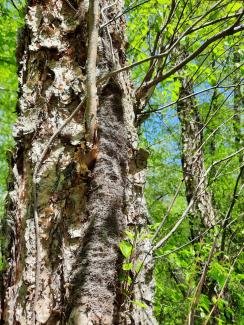
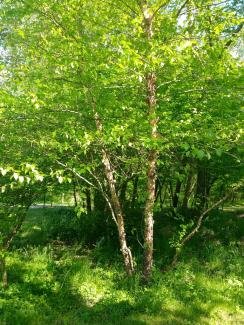
Notes: May grow with multiple trunk (though crowding from that may shorten their lives), beautiful peeling bark. Roots are invasive - do not plant within 20’' of hardscape - and shallow roots - try to plant shrubs at the same time so they grow up together. Great to suck up water and reduce flooding.