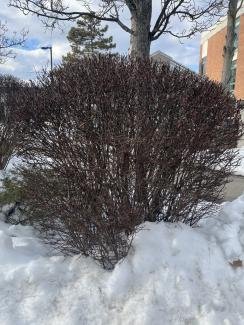
Notes: Promoted for use in hedgerows. It is still widely used for that purpose due to its resistance to deer browsing. It has since escaped from cultivation, and it now poses a threat to forests and parkland from New England to North Carolina. Both Alexandria and Arlington list it as invasive.
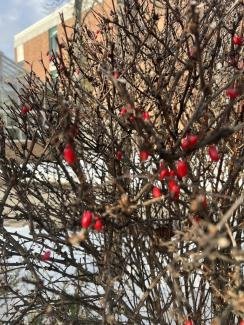
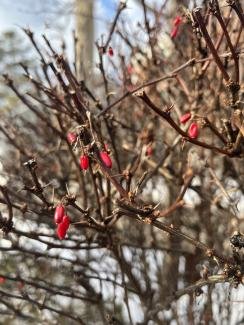
Identification: Japanese barberry leafs out early in spring and keeps its leaves later than most natives, making it easy to spot. Seedlings appear as bright green clusters, with small, smooth-edged, spoon-shaped leaves that grow in tight bunches on very slender stems. Stems become grooved and rusty brown as plants grow, while the inner bark and roots are bright yellow. Plants in the wild often lose their crimson color and revert to green.
Native lookalikes: Although mature Japanese barberry resembles native Allegheny barberry, it's single spine at each node and smooth leaf edges sets it apart.
Spread: Birds and mammals eat the berries from summer through winter and spread seeds in their droppings. Branches may also root where they touch the ground.
Method of removal: Pull up by roots. Easiest in winter. If too large for that, foliar spray or cut and paint.