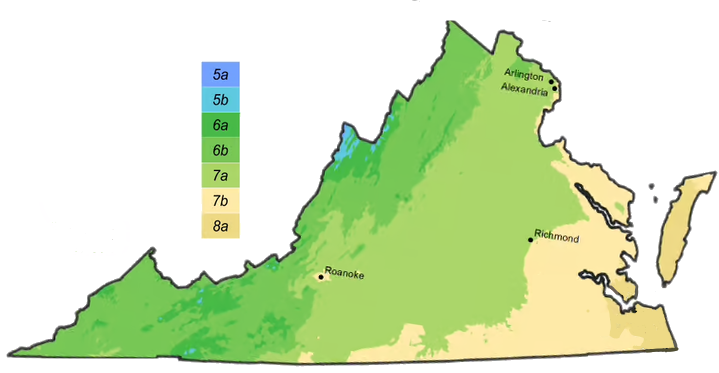
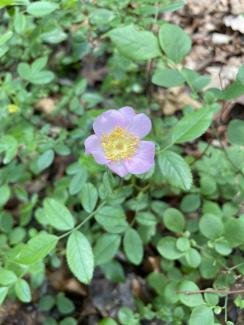
Habitat: Dry-mesic to dry (rarely mesic) upland forests, woodlands, barrens, clearings, old fields, pastures, and roadsides. Common throughout; although few Virginia specimens have been identified to subspecies,\ the great majority of our material is probably ssp. carolina.
Wildlife Value: It provides excellent cover year round. Hips are eaten by songbirds, quail, wild turkey and small mammals. Bumblebees, diggerbees, green metialic bees, Anthophorine bees (Anthopora spp.) syrphid flies, and beetles visit the flowers in search of pollen. Moth larva feed on the leaves. Leaves and stems are browsed by white-tailed deer and elk.
Edibility: Remove the white, bitter base of the petals of the edible flowers before using to garnish desserts, freeze in ice cubes and float in punch. The petals can be used in syrup, jelly, butter, and spreads. The hips are also edible.