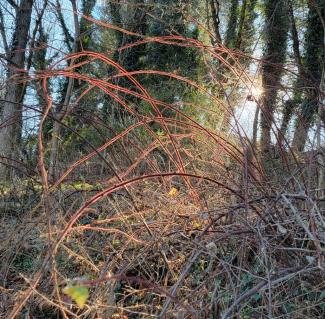
Wineberry plants can grow so thick and tall, reaching 6 to 9 feet high, that they prevent forest regeneration, obliterate wildflowrs, and make it difficult, if not impossible, for hikers, hunters and wildlife to traverse infested forests and fields, snarling them up in tangles of hazardous branches.
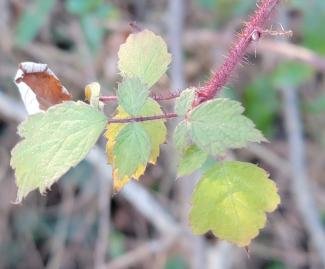
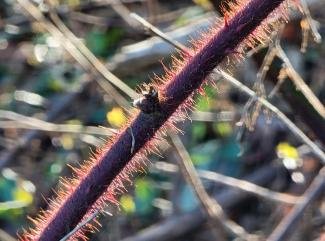
Identification: Seedlings and young canes show bright green leaves and dense reddish hairs on stems and leaf stalks. Stems appear reddish or maroon and develop arching canes covered with many sharp thorns. Leaves are compound, with three leaflets that have serrated edges and a pale, silvery underside.
Similar-looking native: Common blackberry (Rubus allegheniensis) might be confused with wineberry because it has prickly canes and similar summer fruits. The key difference is the dense coat of maroon hairs on wineberry stems.
Method of removal: Pull up by roots or cut and paint