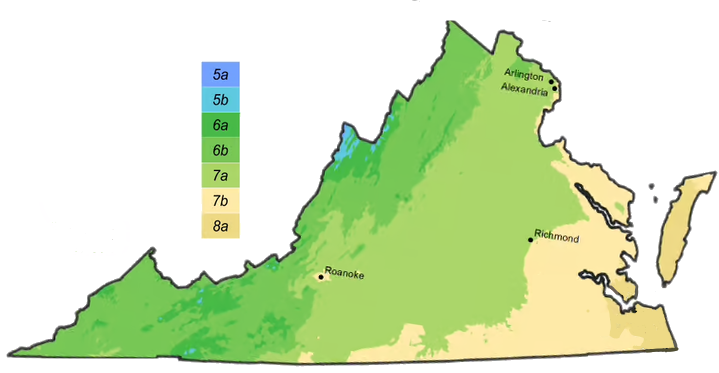
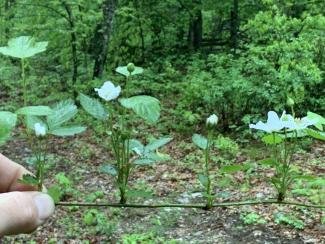

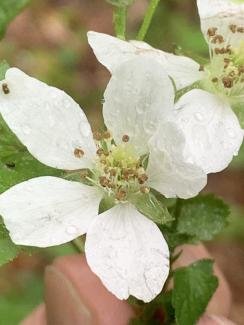
Very low-growing perennial shrub that behaves like a woody vine, producing stems up to 15 feet long that trail along the ground.. Ubiquitous in varied, wet to dry forests, woodlands, barrens, clearings, old fields, fencerows, and other disturbed habitats. Common throughout. This is the characteristic, trailing or decumbent-arched occurring over much of Virginia. It is sometimes cultivated for its edible fruit and there are some named varieties.
Wildlife value: This plant provides nectar for pollinators. This plant also provides food for large mammals, small mammals, and terrestrial birds as well as cover for small mammals and terrestrial birds. The flowers attract both long-tongued and short-tongued bees, who suck nectar or collect pollen. The flowers also attract butterflies and other insects. The fruit is an important source of summer food to many upland gamebirds and songbirds and mammals, while rabbit and deer browse on the leaves and stems.